South Carolina’s Power Companies Are Planning Massive Gas Plants — And You’ll Be Paying the Price
South Carolina’s major utilities are charging ahead with plans to build massive new fossil fuel power plants and pipelines, locking communities into decades of air pollution and rising electric bills.
These facilities will take years to build and will cost billions of dollars. New legislation called the Rate Stabilization Act allows power companies to charge you for interest they accrue during the construction process, giving them access to a cheap line of credit funded by your bills. The Rate Stabilization Act also makes it easier to raise your bills annually with less oversight from regulators.
These gas plants will be expensive, costing billions of dollars that customers will pay through their electric bills. And costs are rising due to tumultuous supply chains and rising construction costs—in November 2025, Dominion and Santee Cooper doubled their cost estimate from $2.5 billion to $5 billion. Power bills will also cover the cost of supplying the plants with methane gas to burn as fuel. Gas prices are notoriously volatile and dependent on foreign markets, leading to frequent price spikes that customers must pay. Power companies bear none of the risks from these price spikes.
In addition to your wallet, these plants are hazardous to your health. The plants will burn methane gas (sometimes called “natural gas”), which will pollute the air in the surrounding communities. These plants will also require a continuous supply of gas, requiring major new pipelines and expansions, leading to habitat and private property impacts along the route.
If you have questions about the gas plants, or you want to take action, fill out this interest form.
Edisto Gas Plant | Canadys, Colleton County
This would be a $5 billion joint build between Dominion Energy and Santee Cooper. It would be one of the largest gas plants in the country at 2,200 MW in size. The application will be filed in December 2025. Canadys was already the location of a coal plant for fifty years; now, the community is looking at decades more air pollution in its future. This gas plant also threatens the important ecosystems of the ACE Basin due to its location on the Edisto River.
This plant would require a brand new interstate pipeline through Hampton and Colleton Counties to supply its methane gas, estimated to cost millions of dollars. This pipeline will likely go through or near the wetlands and rivers of the ACE Basin, such as the Edisto and Savannah Rivers. A recent ad from Carolinas Gas Transmission, which was passed over for the pipeline project, publicly claimed that the proposed route Dominion and Santee Cooper have chosen for the pipeline will lead to unnecessary environmental and private property impacts and isn’t utilizing existing rights of way to the extent promised by power companies. These claims raise serious concerns—and only underscore the need for transparency. If utilities are publicly disputing the route of a major gas pipeline, South Carolinians deserve to know the basic facts.
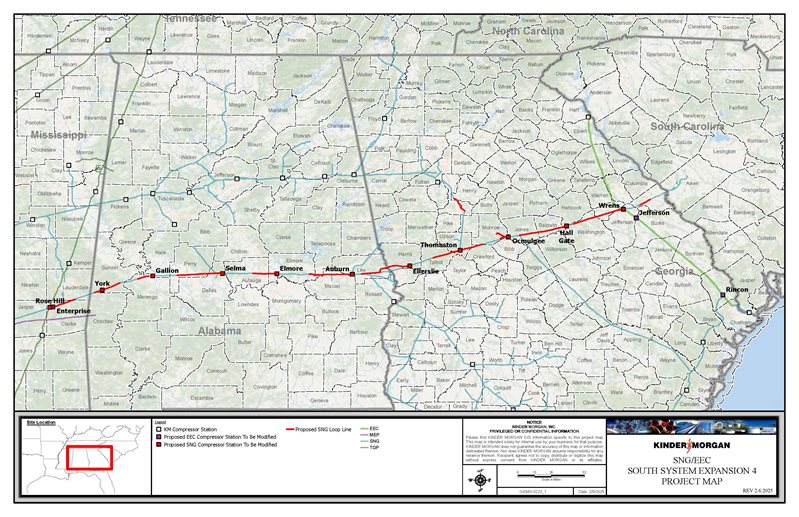

Caption: This map from pipeline company Kinder Morgan shows how gas would be moved from Mississippi into South Carolina.
Anderson Gas Plant | Anderson County
This $3.2 billion plant would be built near the city of Anderson, by the intersection of Highway 81 and True Temper Road. It would be about 1,400 MW in size. Duke submitted its application with regulators in October 2025, with construction expected between 2027 and 2031. This is a greenfield site, meaning Duke would have to do extensive construction. There are also many homes around this site, including the Homeland Park community, leading to concerns over health impacts from air pollution.

Caption: This image from Duke Energy shows the location of the proposed plant.
Take Action
Significant questions remain about both of these plants, including air pollution impacts, cost to customers, and land impacts from the pipeline route. Power companies need to be held accountable to answer these important questions for the surrounding communities.
Once again, if you have questions about the plants, or you’re interested in making your voice heard, fill out this interest form.